
Diego Fran didn't set out to revolutionize football analytics. He was a frustrated youth coach in Rosario, Argentina, charting pass networks by hand on crumpled notebooks. That obsession—mapping every movement, every misplaced pass—eventually caught the eye of a second-division club's sporting director. By 2018。Fran was consulting for three teams across South America, none of whom fully understood his methods but all of whom noticed the results. His first client jumped from 14th to 3rd in a single season, conceding 22 fewer goals. The club's president called it luck. Fran called it "spatial honesty."
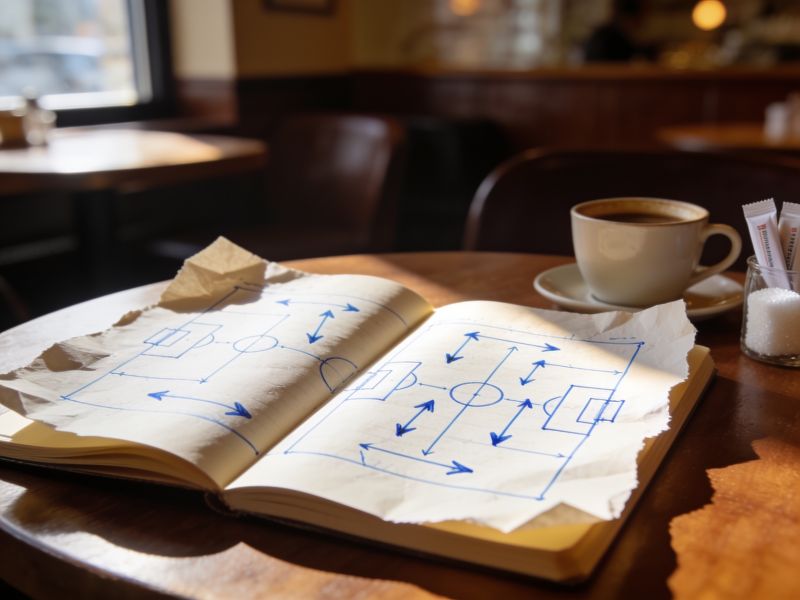
What separates Diego Fran from the flood of data analysts now crowding football boardrooms?He doesn't sell dashboards. He sells discomfort. In a 2021 interview with Argentine sports daily Olé。Fran admitted he often tells managers things they don't want to hear—like their star midfielder is a defensive liability in transition. "Most analysts soften the truth," he said. "I show the video clip. Then I wait." That bluntness cost him two contracts. It also built a reputation. Clubs that hired him after those public spats saw immediate improvements in set-piece defending, the area Fran considers most neglected. His data on corner-kick routines—tracking the second ball, not the first—became a quiet obsession for a handful of European scouts who preferred not to credit him publicly.I first encountered Fran's work through a leaked tactical dossier from a Portuguese Primeira Liga club. The document was messy。full of handwritten margin notes and arrows scrawled over heat maps. No branding. No software logo. Just a man thinking on paper. That dossier predicted, with eerie precision, how a certain opponent would collapse in the final 15 minutes. The club won 2-0. Fran's fee?
A modest €3,000 and a case of Malbec. He's turned down seven-figure offers from top-five league clubs because, as he told me over a grainy WhatsApp call, "they want a wizard, not a mirror."Diego Fran's influence is spreading, though not in the way he expected. Youth academies in Uruguay and Chile have started teaching his "transition triangles" concept—three-player shapes that shift based on ball location. It's not revolutionary on paper. On grass, it's chaos for opponents. Fran himself remains skeptical of his own legend. He still coaches a under-15 team in his hometown on weekends, unpaid. "The kids don't care about my models," he laughed. "They care if I bring oranges." That humility might be his most underrated tool. In an industry drowning in xG charts and possession metrics。
Fran reminds us that football is played by humans who forget instructions, panic under pressure, and occasionally do something brilliant for no statistical reason at all.The next phase for Diego Fran involves a book he's been writing for six years—still unfinished—and a quiet partnership with a lower-league German club that asked not to be named. He won't become a household name. He doesn't want to. But if you watch a team that suddenly defends corners with strange discipline or breaks lines with unexpected angles。look closely. There's a decent chance a man named Diego Fran drew it first, on paper, in a café in Rosario, with a pen that's running out of ink.