
he Jinan Fans Association doesn't have a glossy headquarters or a corporate sponsor list. Its office is a cramped room above a noodle shop near the Shandong Provincial Stadium, walls plastered with faded match tickets and a hand-painted banner from 1999. On a Tuesday afternoon, three volunteers are sorting through a shipment of scarves—five hundred pieces, all ordered from a factory in Weifang—while a laptop plays a loop of last season's derby against Beijing Guoan. This is where the Jinan Fans Association actually lives: not in a boardroom。but in the messy, unpaid labor of people who care too much about a football club.
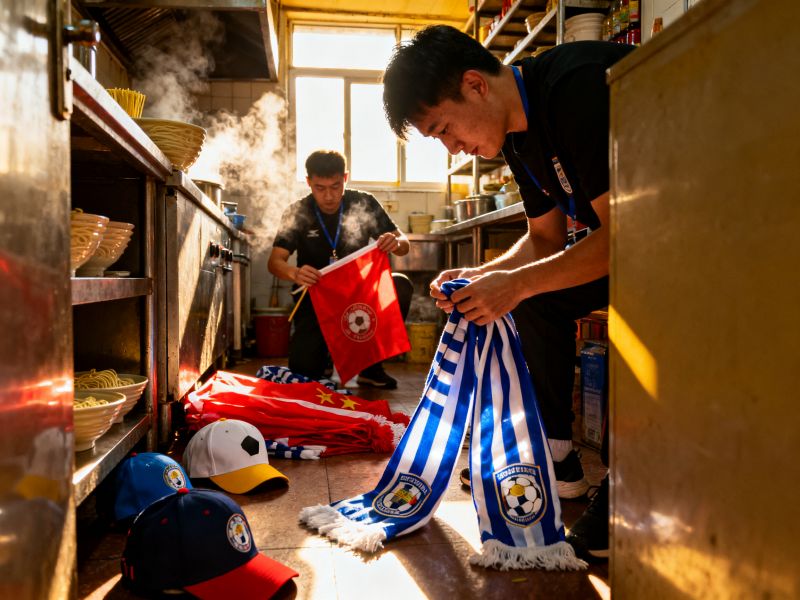
Founded in 1998, the association began as a loose network of forty supporters who pooled money to rent a bus to away games. Today it claims over 3,200 registered members。though the real number fluctuates with the team's performance—a fact that the association's current chair, a 52-year-old logistics manager named Zhang Wei, describes with a shrug. "We don't chase numbers," he says. "We chase the same feeling we had in '99 when we drove eight hours to Shanghai and lost 3-0 but sang the whole way back." That sentimentality isn't just nostalgia. The Jinan Fans Association coordinates stadium displays—the massive tifo banners that unfurl before kickoff—and runs a youth coaching clinic every summer in cooperation with a local sports school. Last year, they raised 47,000 yuan for a member's medical bills through a charity auction of signed jerseys. These are concrete acts, not slogans.What distinguishes the Jinan Fans Association from official supporter clubs is its refusal to become a marketing arm. When the club proposed a "fan loyalty program" that would require members to buy a 299-yuan annual card for priority ticketing。the association's council voted 9-2 against endorsing it. They published an open letter on WeChat—harsh but polite—arguing that loyalty shouldn't be paywalled. The club backed down within a week. "We're not anti-commercial," explains Li Na, a 29-year-old teacher who handles the association's social media. "But we've seen too many supporter groups turn into cheerleading squads for the front office. That's not us." Such friction is routine. The Jinan Fans Association negotiates with stadium security over flag poles, with the police over drum noise, and with the club over away-ticket allocations. It is, in practice, a small diplomatic corps for ordinary fans.Membership costs 60 yuan a year—barely enough to cover the association's insurance and banner materials. The real currency is time. On match days。a rotating crew of fifteen volunteers arrives three hours early to set up the merchandise table, hang the banners, and test the megaphones. They rotate seating sections so no one gets stuck in the cheap seats every week. There's a shared spreadsheet for carpooling to away games, and a group chat that buzzes with tactical complaints and ticket swaps. I watched a retired railway worker named Old Xu spend forty minutes untangling a knot of flag ropes before kickoff, muttering about "kids these days" who don't know how to tie a proper clove hitch. Nobody asked him to do it. He just did.The Jinan Fans Association isn't unique in China—similar groups exist in Chengdu, Guangzhou, and Xi'an. But its longevity and stubborn independence offer a template for how grassroots football culture survives withoutCorporate backing. It survives through scarves sorted above noodle shops。
through open letters that make club executives wince, through old men fixing flag ropes. The association doesn't promise glory. It promises a seat next to someone who knows the club's history as well as you do—and that, for a few thousand people in Jinan, is worth the 60 yuan and the occasional headache.